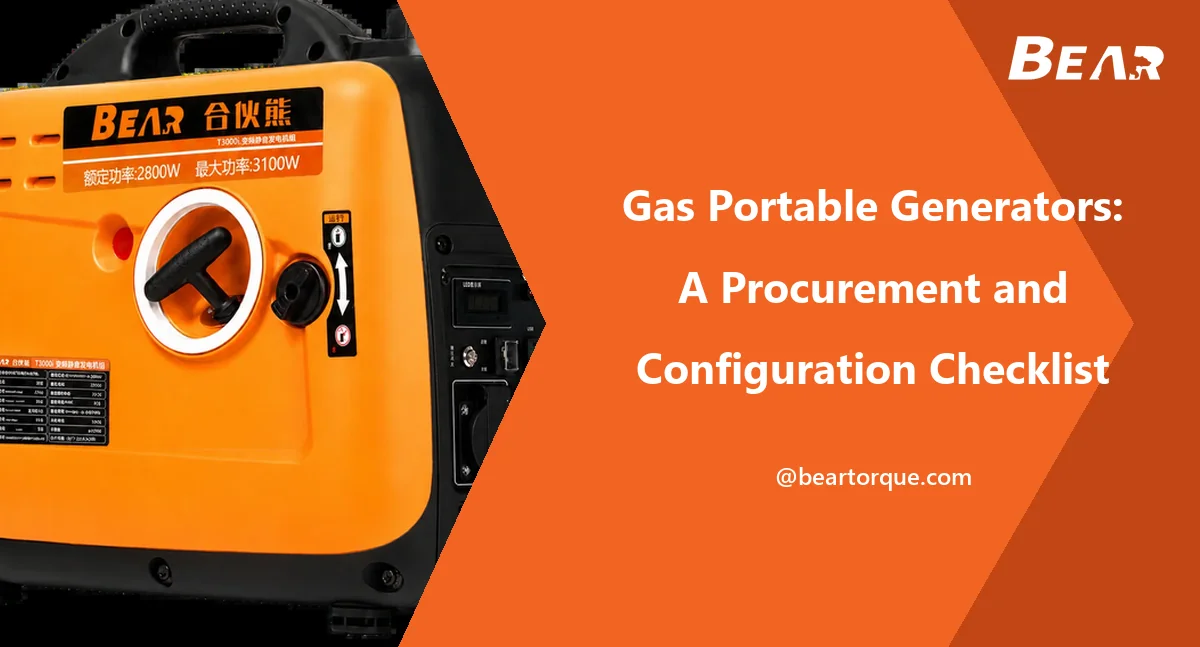

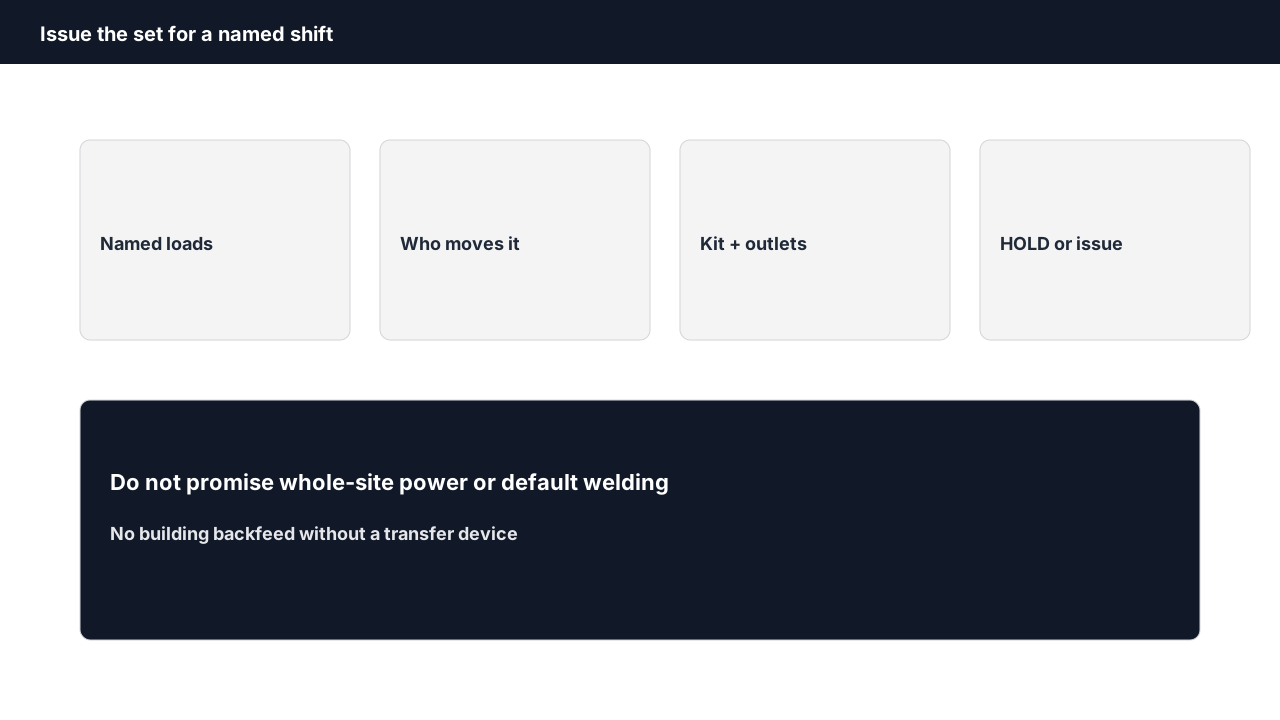
Issue a portable gasoline set for a named shift: loads, movement, kit, outlets and wet-area rules. Do not sell whole-site power or building backfeed.
In this guide6 sections
A portable gasoline generator for a job site is chosen by the shift task, how it will be moved and what ships in the crate — not by one number on the housing. Keep the card on HOLD until loads, surface, outlets and the fuel owner are named. This page does not sell power for an entire building and it does not replace a stationary generating set.
Freeze the shift task, not “kilowatts in general”
Write what will be fed: hand tools, lighting, a pump, chargers or a welder. Mark motor loads that start together. An empty list cannot compare power.
Require a named load and supporting model documents for claims such as powering the whole site or supplying a welder. Use the welding-generator buyer guide and the load-list method to define those requirements.
Voltage, frequency, phase and plug type are supply fields. They cannot be inferred from the word construction. Open frame versus canopy is a neighbour decision: open-frame versus enclosed.
Check who moves the set, and on what surface
Record who will move the generator and the proposed handling method: manual carrying, wheels, a forklift or another documented arrangement. Describe the route and working surface, including gravel, mud or stairs, and whether the set stays on a fixed pad between uses.
Mass, wheels, folding handles, lift points and a protective frame must match that story. If the quote does not name the wheel and support kit, status is HOLD. A stout-looking frame does not prove the set can be lifted by any tube.
Protect the panel, tank, outlets and engine from a typical site strike. A photograph of a “strong frame” does not replace a manual description.
Collect the kit: frame, outlets, cables and files
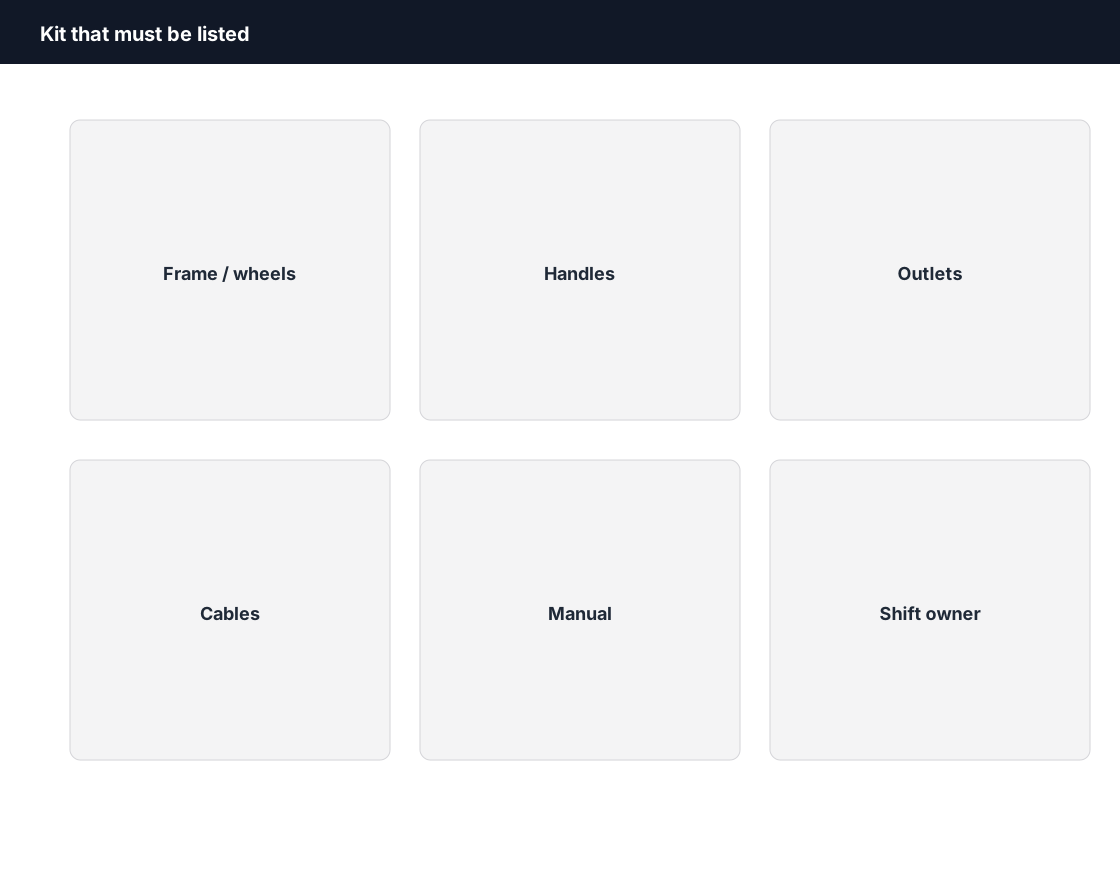
The offer must list more than “generator”: wheels, handles, supports, tools, plug or cable, the market-language manual and the outlet list. Check that list against the packing list and kit photos.
Outlets, voltage, frequency and protective devices must match the crew’s tools. An adapter does not change start capability. Check extension leads separately: length, section, insulation and crush risk.
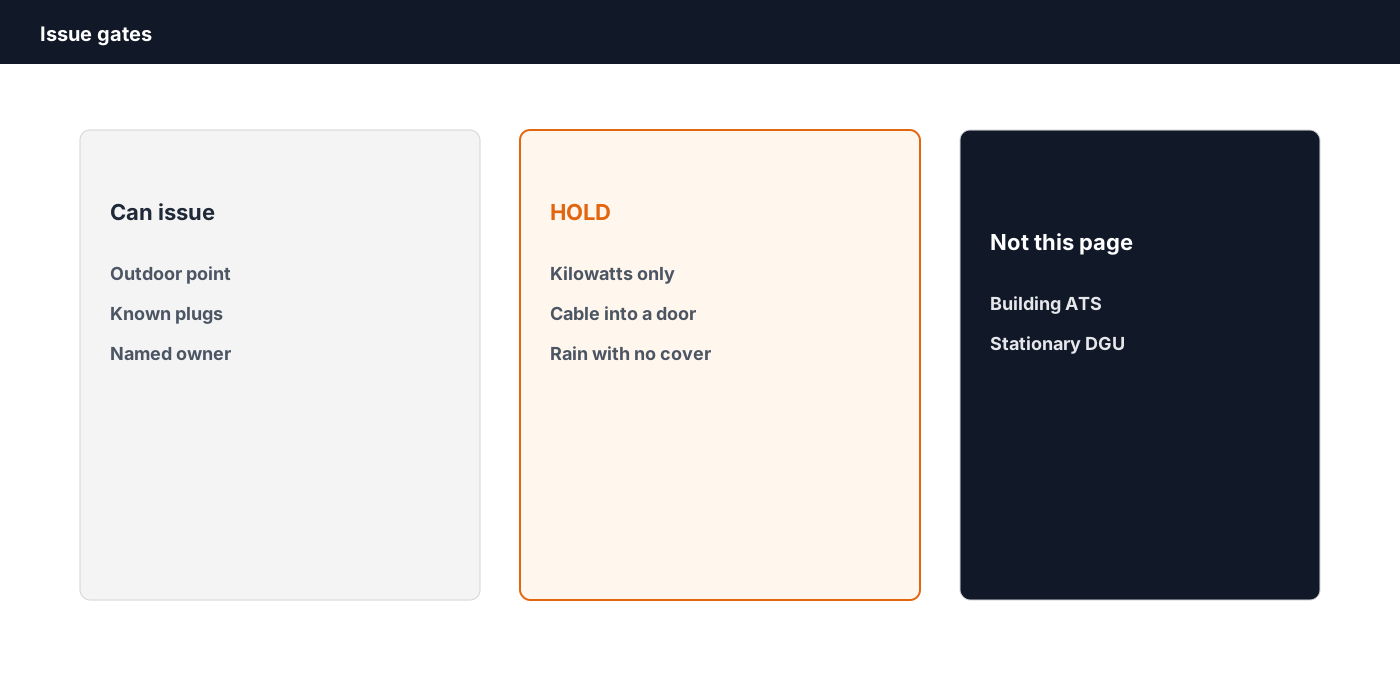
Wet-area work is its own field. “Fine in the rain” without cover, dry joints and agreed protection stays HOLD. Measures come from the model manual and site rules, not from a generic poster.
For a rental fleet, also record duty hours, outlet requirements and the handover process. The gasoline portable procurement checklist supplies the configuration fields to include in that request.
Do not feed a building board without a transfer device
Loads connect to the generator outlets, or through a solution installed by a qualified electrician with a transfer device. A direct “feed the board” plan without isolating the utility creates backfeed and shock risk for utility staff.
Place the set outdoors. Do not aim exhaust at doors, windows, intakes, cabins or pits. Refuel outdoors, with the engine off and cool, and clean spills. General portable-generator practice is summarised in OSHA publication 3273. That leaflet is not a destination-market regulation and not proof of a model.
Name the owner of fuel, oil, daily inspection and the shift-handover log. If that person does not exist, do not issue the set.
Job-site issue card
| Field | Can issue | HOLD |
|---|---|---|
| Movement | Mass, wheels, handles and lift points match the move | “Portable” with no mover or surface |
| Frame | Frame or canopy protects panel, tank and outlets | Protection not described |
| Kit | Wheels, cables, manual and plugs are listed | Quote says only “generator” |
| Outlets | Outlets, voltage, frequency and protection match the loads | Loads and plugs unknown |
| Wet area | Cover, cables and protection agreed | Rain assumed without a plan |
| Building connection | Generator outlets or an electrician’s transfer scheme | Direct feed into the board |
| Service | Fuel, inspection and log have an owner | No owner between shifts |
Do not promise all-weather running or whole-site power.
What to send with the request
Send every supplier the same pack: market, site type, load list with starts, voltage and frequency, how the set moves and on what surface, required outlets and cables, expected rain or dust, quantity and document list.
Ask them to return model identity, working mass and dimensions, wheel and frame kit, outlet diagram, the matching manual, kit photos and exclusions. Start from the gasoline generator category. Power and kit are confirmed only on the exact configuration through the project form.