
Name critical shop circuits, separate motor starts, and keep the changeover manual. This page is not industrial ATS or whole-building standby.
In this guide5 sections
Size a portable shop-backup generator from the critical circuits and their running and starting demands. Record which loads must stay on and which starts can be staggered, then have the connection and manual changeover reviewed for that site. Floor area alone does not define the required output.
Name the circuits that must stay live
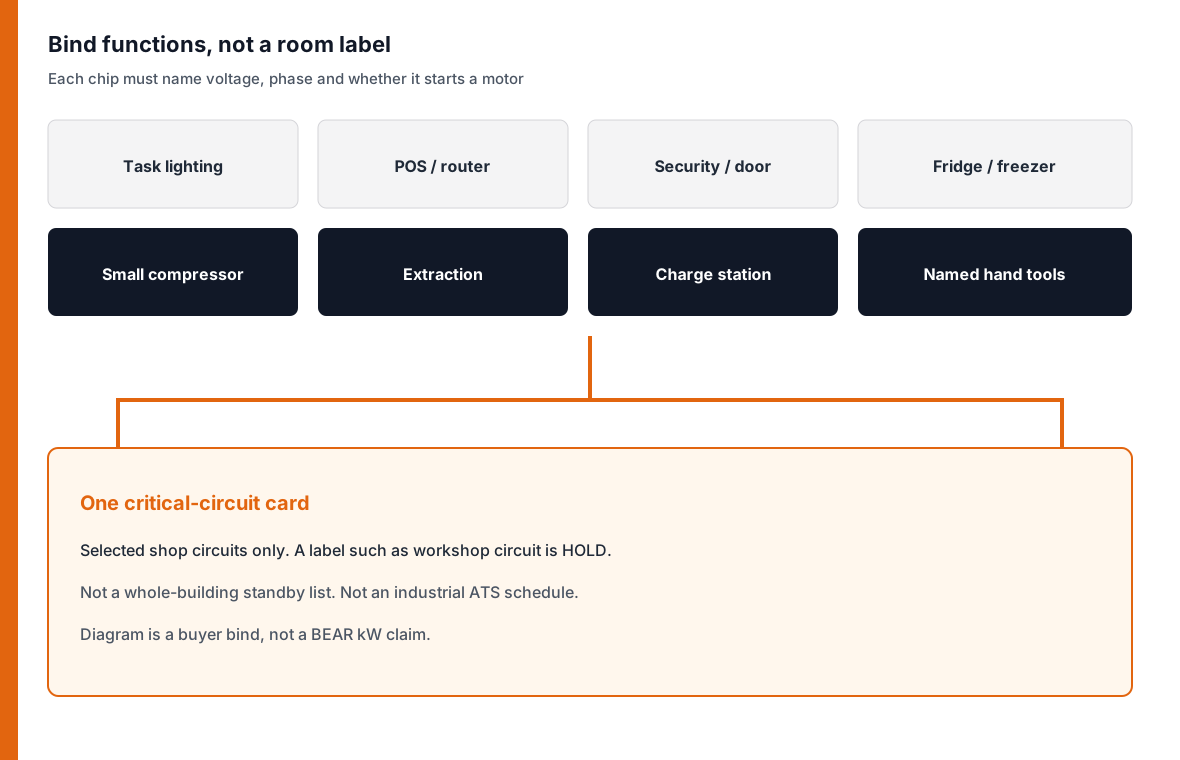
Critical shop loads are the jobs that stop lost stock, an unsafe stop or a missed dispatch. Typical items are task lights, a till, a router, door or alarm gear, one fridge or freezer, a small compressor, extract, a charge point or a few hand tools.
Record each load by job, voltage, Hz and phase. Say if it starts a motor. “Workshop circuit” is not an RFQ input. “One 230 V single-phase compressor, one lighting circuit, one router and two fridge units” is.
How to turn a load list into a like-for-like power request is on the sizing method. A build-shift issue card is a neighbour task on portable generators for job sites.
Split running demand from motor start
A set must cover the run pattern. Do not add nameplate watts into one pile. Compressors, pumps, fridge units and some tools take more to start than to run. Write run demand and start demand as two columns. If two motors can start together, say so.
Do not turn a catalogue “5 kW shop set” into a plan. The starting versus running watts page keeps those two numbers apart. Noise near a counter or a shared wall is a separate check on quiet portable generator noise.
Keep the changeover manual and isolated
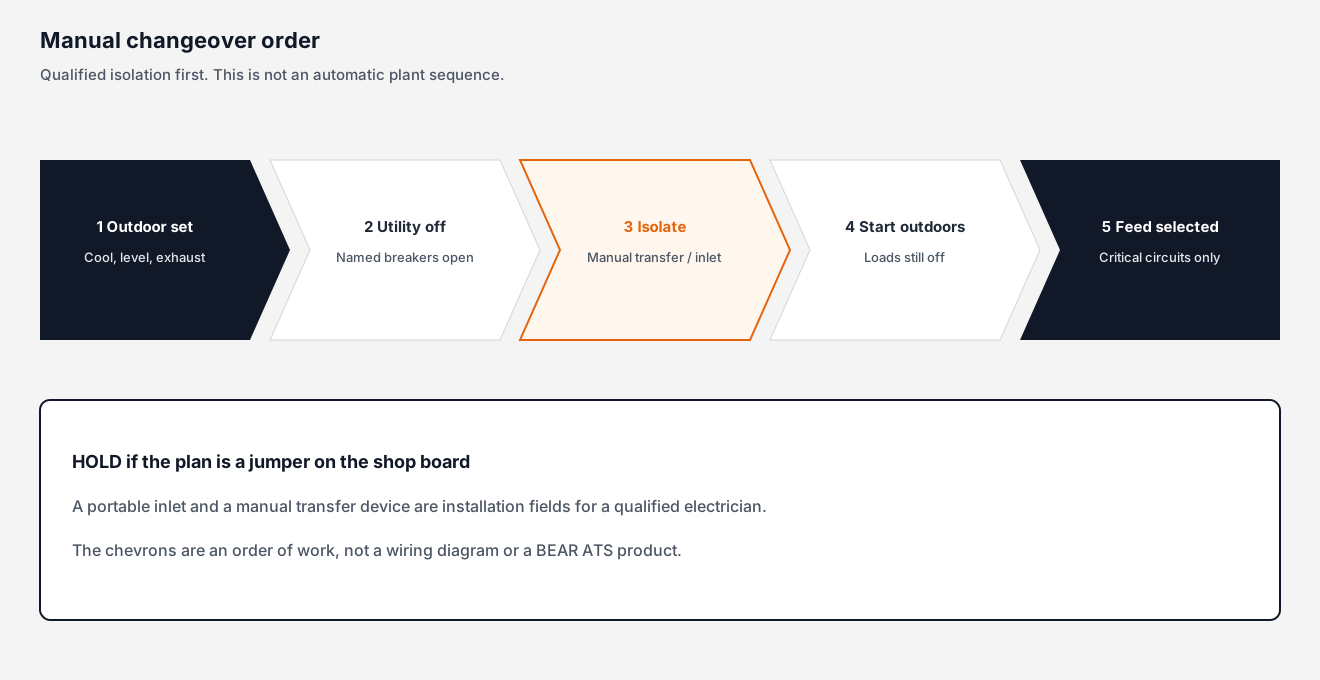
Feeding fixed shop circuits requires transfer equipment that isolates the generator supply from the utility supply. An inlet is only a connection point; it does not provide that isolation by itself. Have a qualified electrician select and install the transfer arrangement for the site, following the equipment instructions and applicable local requirements. The OSHA portable-generator grounding fact sheet explains this distinction for US installations.
Plant auto transfer, set-room plant and utility-parallel schemes belong on their own brief. The neighbour page on electric start, remote start and ATS is about start methods. It is not a licence to treat this portable set as building standby.
Place the set outdoors. Do not aim exhaust at doors, windows or intakes. OSHA publication 3273 is generic portable-set practice. It is not a market code. It is not proof of a model.
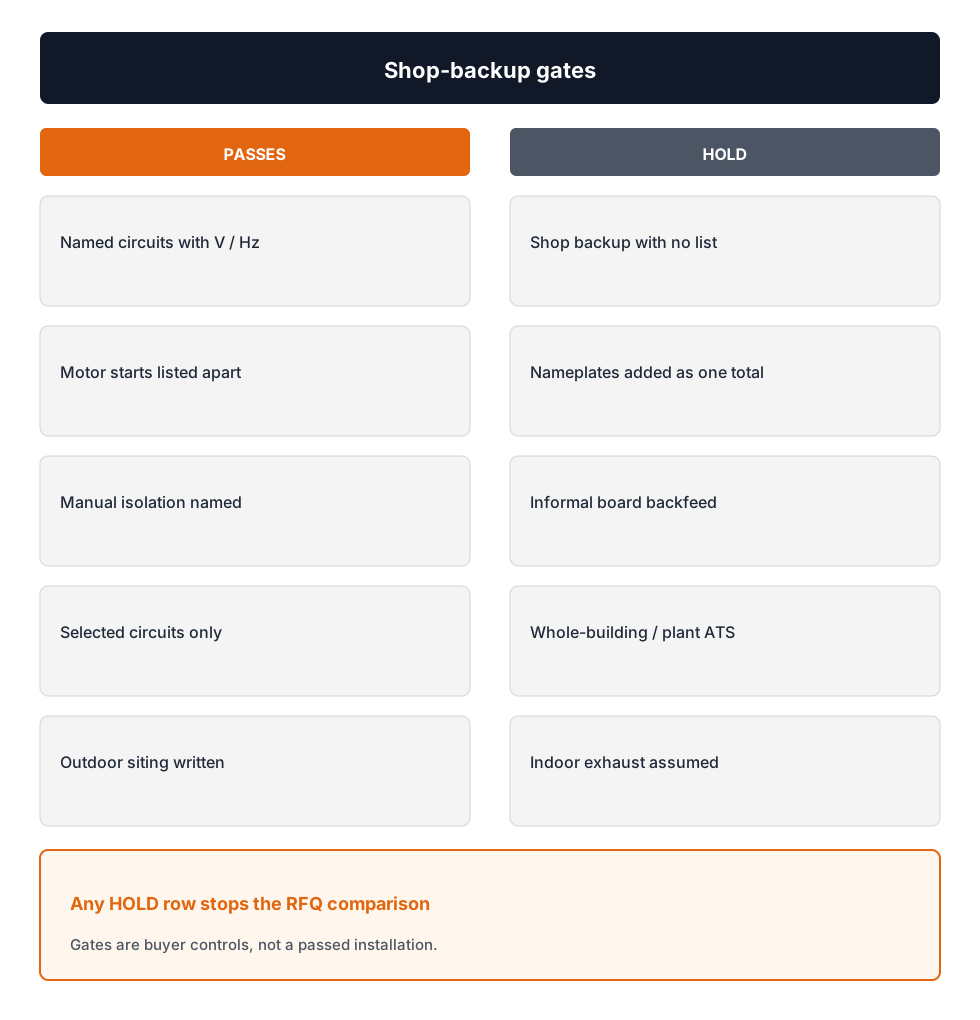
Shop-backup HOLD table
| Field | Passes | HOLD |
|---|---|---|
| Named loads | Each circuit has function, V/Hz and phase | “Shop backup” with no list |
| Motor start | Compressors and tools listed apart from running | Nameplates added as one total |
| Changeover | Transfer isolation and inlet arrangement confirmed by a qualified electrician | Inlet alone or informal board backfeed |
| Scope | Selected circuits only | Whole-building or plant ATS |
| Siting | Outdoor placement and exhaust path written | Indoor running assumed |
| Documents | Model identity plus inlet / transfer identity | Catalogue kW only |
What to send with the request
Send the destination market, shop type, critical-circuit list, running and starting demand, voltage, frequency, phase and quantity. Identify any proposed inlet and transfer equipment, and list the documents and photographs required at delivery.
Ask them to return model name, outlet and protection list, the matching book, kit photos and what is left out. Start from the gasoline generator category. Power and isolation lock only on the named setup through the project form.