
Size a portable set from the pump-system passport and starting method. Do not publish a universal start-current multiplier.
In this guide5 sections
A portable generator for a water pump is chosen from the full pump-system documents and the actual starting method, not from one running-kilowatt figure. Starting current is the current at the start event. Its value and the start method come from the pump, motor, controller or variable-frequency drive documents.
The chain may include a starter, capacitor, pressure switch, dry-run protection, VFD, cable and automation. “Motor only” is not enough. Keep a SKU labelled “for a well / water pump” on HOLD until the pump model is named.
This page does not design a fire-pump station or repeat industrial DGU motor-start engineering.
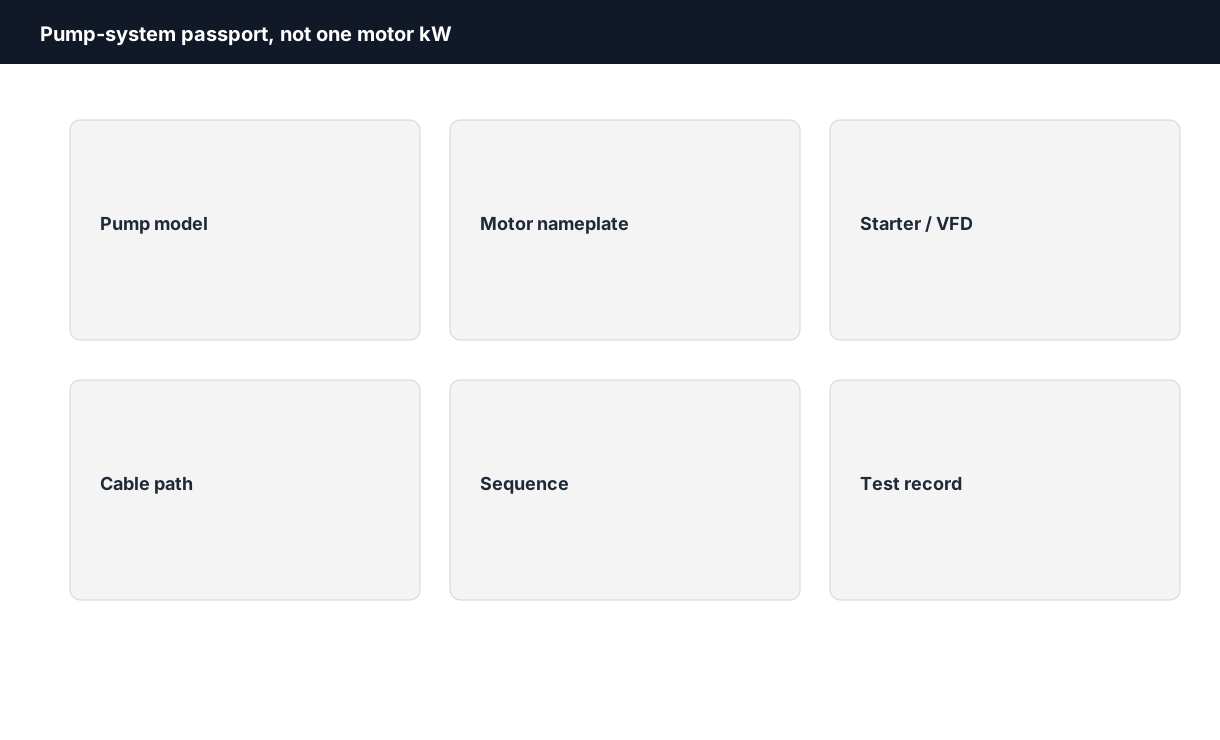
Collect the system passport, not a household kilowatt
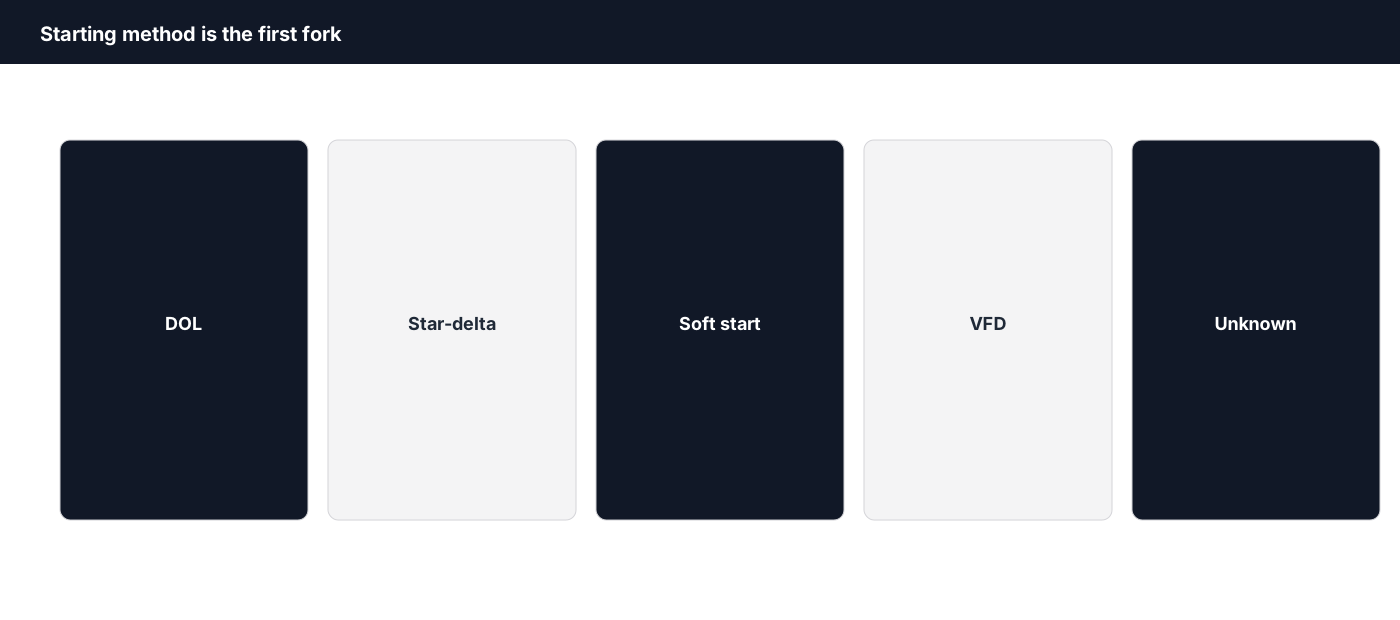
Record maker and exact models of the pump, motor, controller and automation. Record nameplate supply: phases, voltage, frequency and connection. Record the start method: direct-on-line, capacitor start, soft start, VFD or another documented scheme.
Running and starting data must have a source. “Water pump, need a generator of X kW” does not pass. Other simultaneous loads — lights, heat, treatment, tools — stay on a separate list, as in what size generator do I need.
The set’s electrical version must match the pump system. A loose “220/380” line does not choose the supply; use the voltage and frequency checklist and single-phase versus three-phase.
Do not appoint one start-current multiplier
Motor construction, start method, controller and cable length differ. Do not publish a universal multiplier and do not accept one from a supplier in place of the passport. Missing start data is HOLD, not “add margin by eye.”
Industrial motor-start work on a stationary DGU is a neighbour page: motor-starting kVA, inrush and voltage dip. This article does not move those engineering thresholds onto a portable well or irrigation set.
If a VFD or sensitive controller is present, request that maker’s rules for an autonomous source. The neighbour architecture check is the inverter buying guide. Compatibility is not proved by the word inverter on the generator card.
ISO 8528-1 is terminology context for generating-set ratings. It does not size your pump.
Include cable, automation and restart
Cable length, section and route, any intermediate board and connectors belong on the sheet before the generator is ordered. “We will pick the cable later” leaves start-event risk.
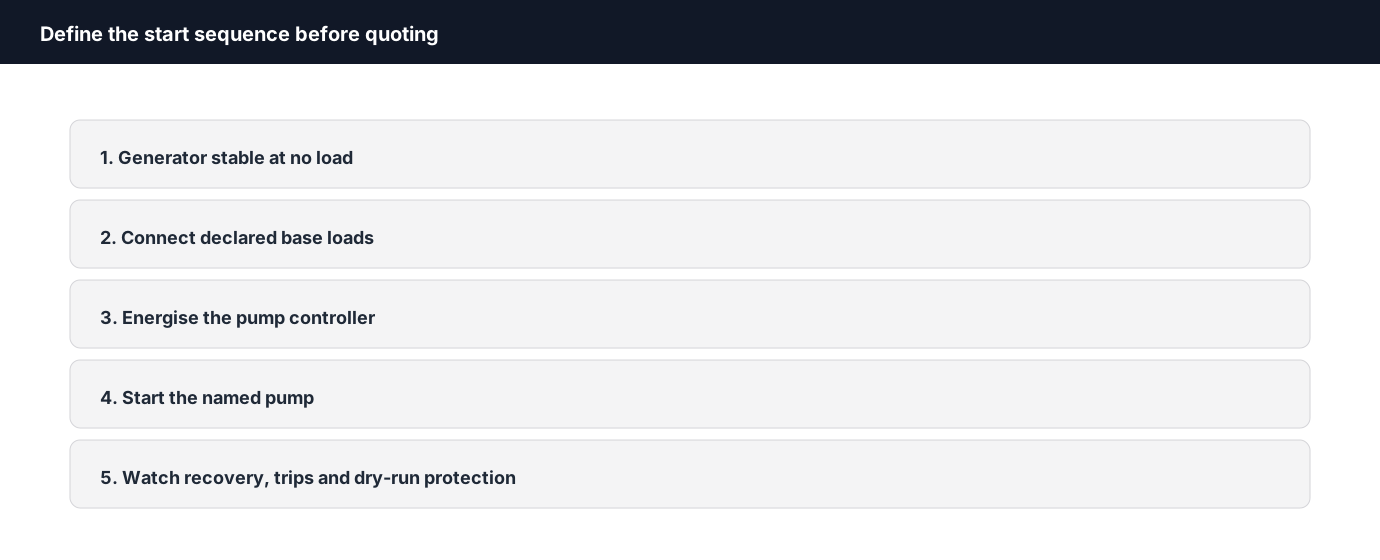
Describe sequence: start the set, let it settle, close the pump circuit, stop in reverse. Do not start the pump at the generator’s own start event unless the model manual allows it. If the pump starts automatically on pressure, write which loads appear after power returns.
Protections follow instructions. Do not “stop nuisance trips” by raising the breaker rating. Panel composition is covered in the outlet and plug guide. Admit a “for pump” SKU to rental or wholesale only after a test with the real pump or an agreed stand. A no-load generator test does not close the claim.
Pump HOLD table
| Field | Passes | HOLD |
|---|---|---|
| Pump passport | Exact model and full pump/motor documents | Only “water pump” |
| Start | Maker or controller algorithm | Only running kW |
| Electrical version | Phases, voltage, frequency and scheme match | Generic 220/380 |
| Automation | Controller, relays, starter, VFD counted | Motor only |
| Cable | Length, section, connectors checked first | Cable chosen after purchase |
| Sequence | Start, close, stop described | Arbitrary pump switch-on |
| Test | Start and run with the pump or stand | Idle generator only |
| Protections | Breaker, motor and dry-run roles are clear | Trips “solved” by a larger breaker |
Rated and peak labels of the set still follow rated versus peak.
What to send with the request
Send market, exact pump and automation models, passports, start method, running and starting data, phases, voltage, frequency, cable length and section, other simultaneous loads, automatic start yes/no, duty and quantity.
Ask the supplier to return applicability of an exact generator model, electrical version, start limits, start-sequence instruction, panel and nameplate photos, the matching manual and the terms of a control start. Start from the gasoline generator category. Pump compatibility is confirmed only on the named passports through the project form.