
Size a portable set from the compressor passport and starting method. Do not publish a universal start-current multiplier on the card.
In this guide5 sections
Select a portable generator from the exact compressor model, motor nameplate and documented starting method. Running kW alone is insufficient; keep a compressor-compatible listing on hold until the supplier can assess the named pair.
Pump systems belong on portable generators for water pumps. Plant inrush work belongs on motor-starting kVA, inrush and voltage dip. Other loads stay on what size generator do I need.
Collect the compressor passport, not a household kilowatt
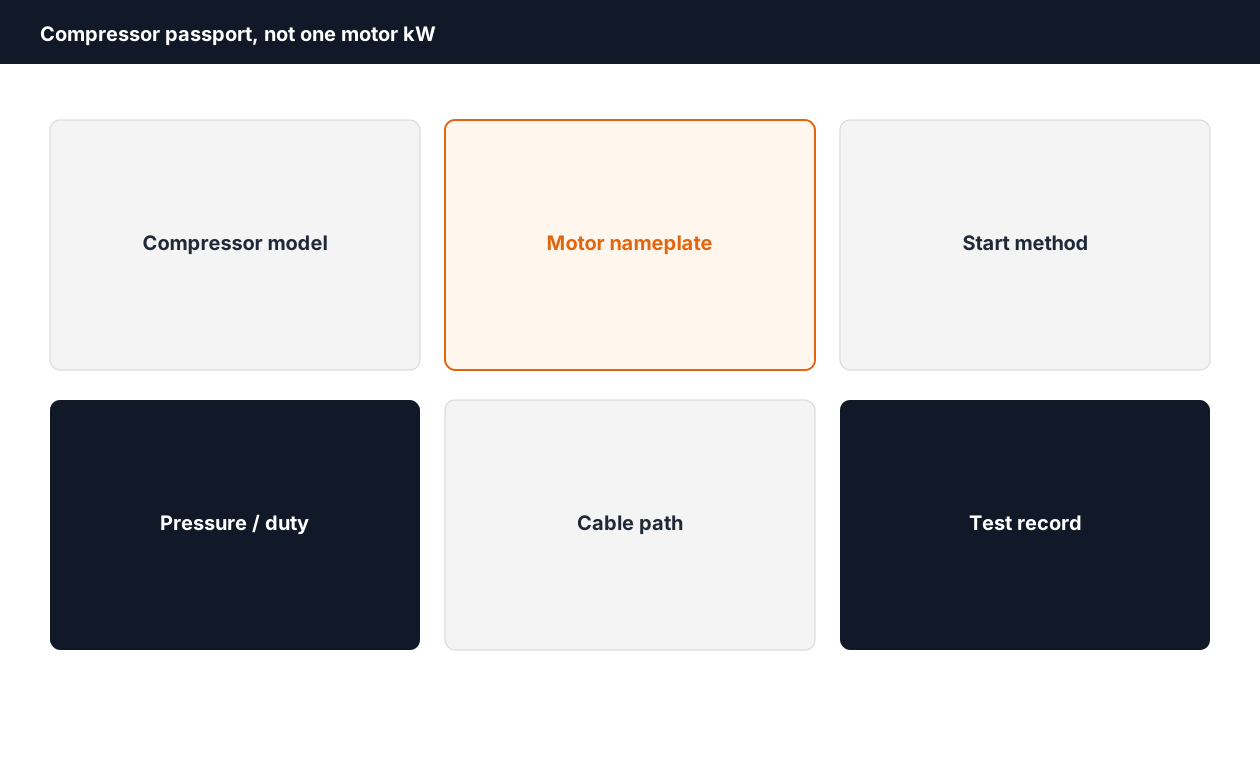
Record the compressor manufacturer and model, motor nameplate, voltage, frequency, phase and starting method. Attach the relevant manual pages so the supplier can assess one identified compressor rather than a generic running-power request.
If the product is a combo, name each job. Name which engine or motor runs the compressor. A combo SKU does not drop the file pack.
The set’s power version must match the compressor. Use the voltage and frequency checklist. Use the outlet and plug guide.
Starting method comes from the compressor documents
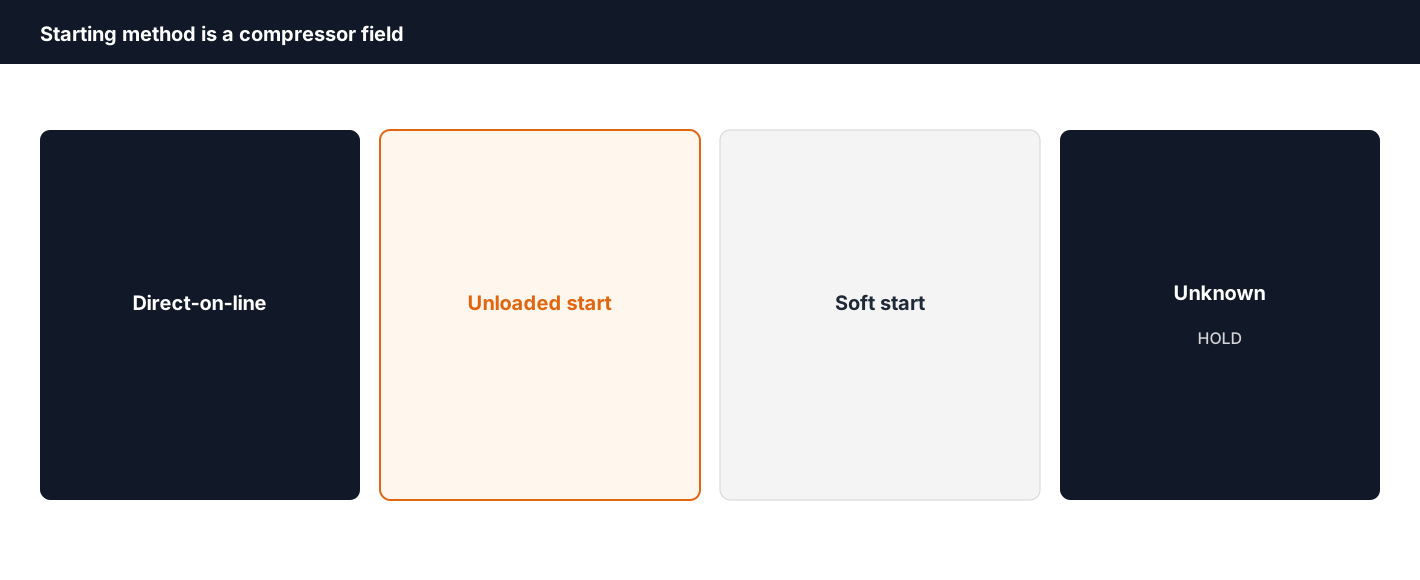
The start event changes if the maker uses direct-on-line, no-load start, soft start or another written scheme. Do not print a one-size start-amp factor. Do not take one from a seller in place of the file pack.
Start-amp fields on a compressor plate are maker data for that machine. They are not a set sizing rule. Missing start data is HOLD. Do not “add margin by eye.”
ISO 8528-1 is set terms. It does not size your compressor.
Combo SKUs still need a named compressor
Retail combo cards mix three jobs. Welding terminals belong on the welding generator buyer guide. Do not treat a combo wattage as compressor-start proof.
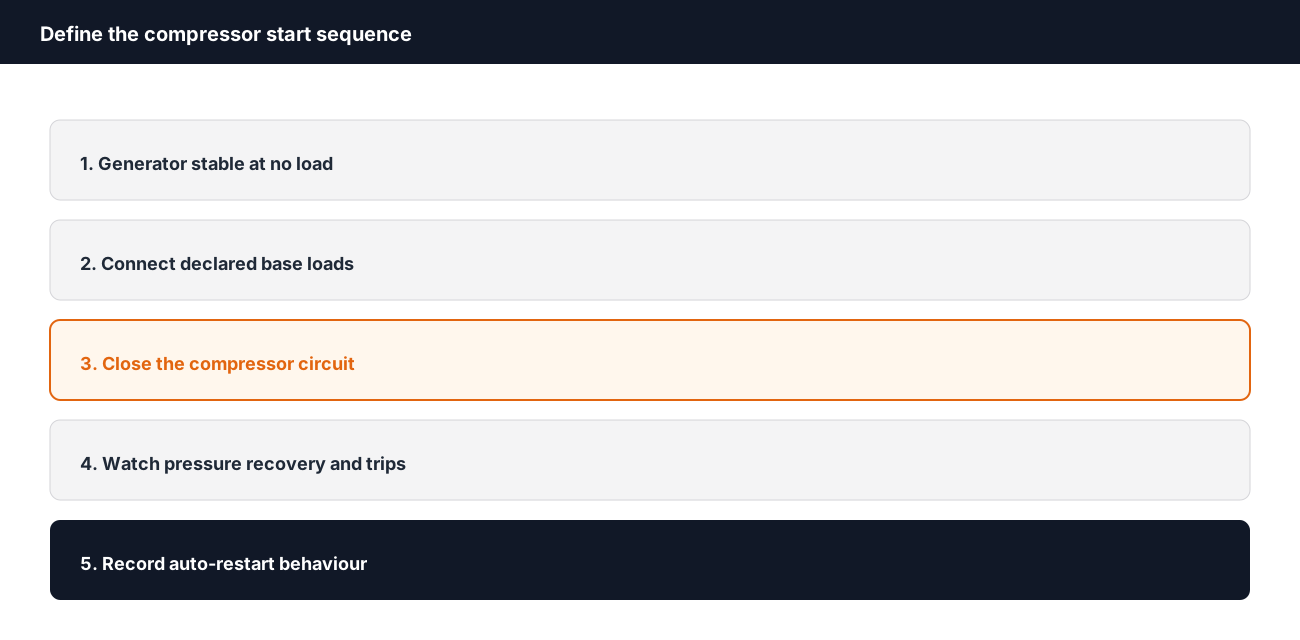
Write the order. Start the set. Let it settle. Then close the compressor circuit. Do not start the compressor at the same time as the set unless both books allow it. Auto-restart after a stop is a separate field.
Rated and peak labels of the set follow rated versus peak. OSHA, Using Portable Generators Safely is outdoor-use context. It does not pair a compressor model.
Compressor HOLD table
| Field | Passes | HOLD |
|---|---|---|
| Compressor passport | Exact model and motor documents | Only “air compressor” |
| Start | Maker method and start data | Only running kW |
| Electrical version | Phase, voltage, frequency match | Generic 220/380 |
| Combo identity | Compressor, generator and welder named apart | One headline wattage for three functions |
| Sequence | Settle then start compressor | Arbitrary switch-on |
| Auto-restart | Pressure-switch behaviour written | Assumed simultaneous tools |
| Test | Start and run with the compressor or agreed stand | Idle generator only |
| Multiplier | No universal start-current factor used | “Times running amps” with no passport |
What to send with the request
State the market, use, compressor model and file pack, start method, other loads, voltage, Hz, phase, quantity, combo yes/no, and the files you already hold.
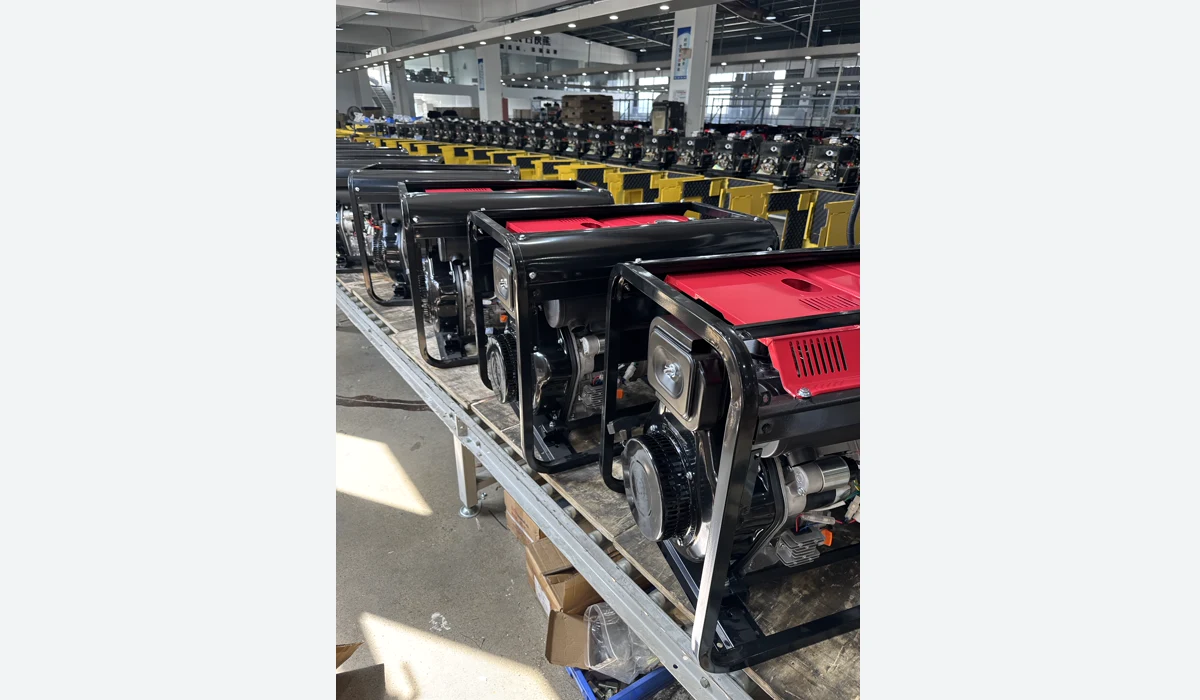
Ask the supplier to identify the proposed generator, its electrical configuration, starting limits and required sequence. Request panel photos, the matching manual and the scope of a starting test with the named compressor. Review the gasoline generator category, then send the compressor documents through the project form for a configuration-specific reply.