

Bind oil class and viscosity to the named engine manual and the destination climate. Do not publish or accept a universal grade.
In this guide5 sections
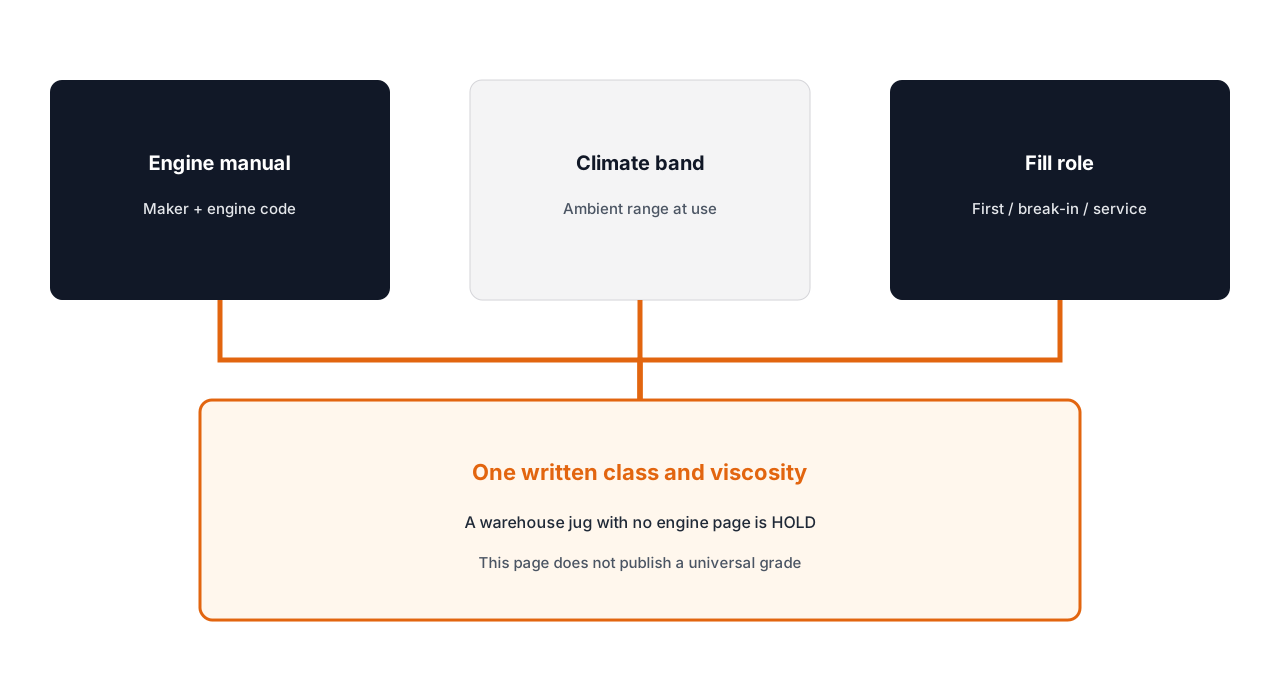
Oil for a portable generator is a written class and viscosity taken from the engine manual that names this engine, plus the climate band where the set will run. A warehouse default, a forum 10W-30 slogan or a car-oil habit is HOLD. This page does not publish a universal grade.
Bind class and viscosity to the engine document
Write the engine maker, engine code and the manual page or clause. The generator housing model is not enough if the engine page is missing. A supplier reply that only says “4-stroke oil” does not close the field.
Capacity, whether detergent oil is required, and whether synthetic is allowed or forbidden are copied from the same page. Do not infer them from another brand’s chart.
How files are bound to the SKU before you order is on documents before order. First-fill versus first-change timing sits with first start and break-in.
Treat climate as a second input, not a warehouse default
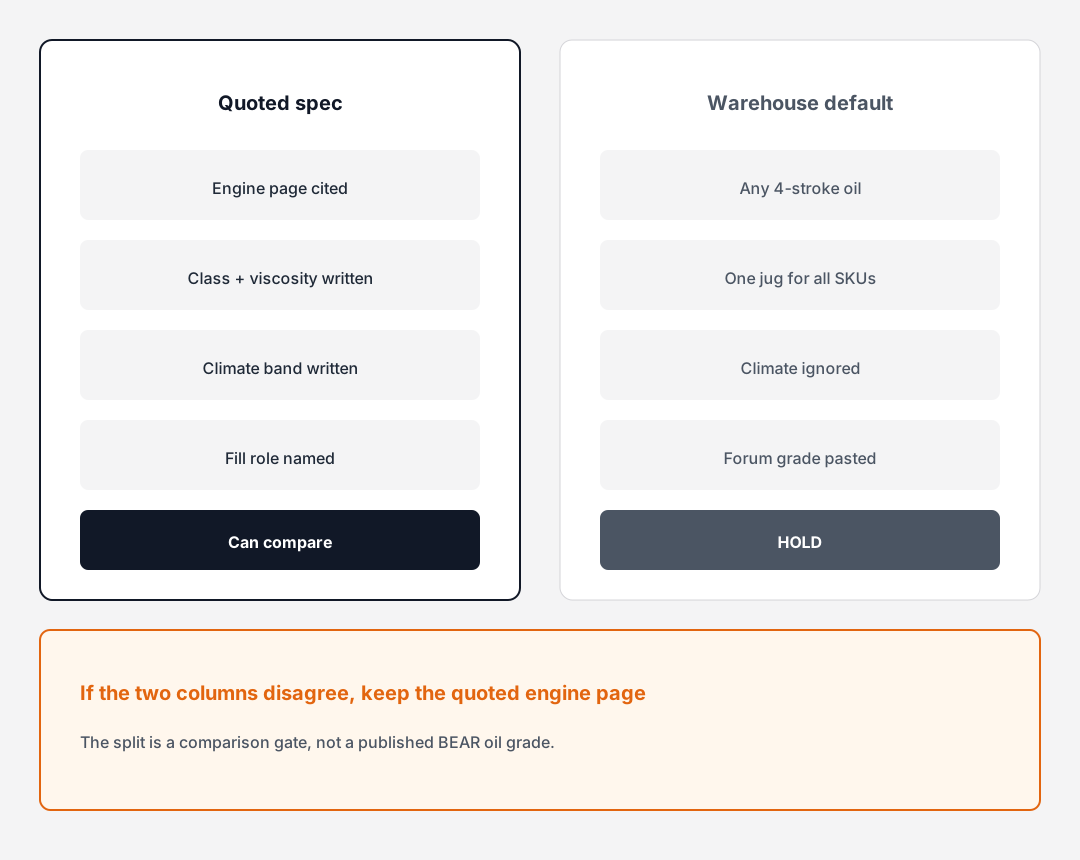
Some engine pages show more than one viscosity against an ambient range. Write the destination climate band next to the grade. One jug for all markets is HOLD.
Do not promote a winter grade or a summer grade as a house standard. If the engine page is silent on climate, write “no printed ambient band” and ask for a written return for that engine. Silence is not a licence to invent a chart.
Later service fills follow the maintenance schedule. A first-order oil stock belongs on spare parts with the first order only after the spec is written.
Separate first-fill, break-in change and service fill
The same engine can name a different action for first fill, the first change after break-in, and later service. Write the role on the request. Mixing those three into one “generator oil” line hides a mismatch.
Do not treat automotive petrol-engine oil as proven for this engine unless the engine page allows that family. Do not treat a gaseous-engine oil note from another product family as a portable-set rule.
Oil-spec HOLD table
| Field | Passes | HOLD |
|---|---|---|
| Engine identity | Maker, engine code and clause ID | “Portable generator oil” only |
| Class / viscosity | Copied from that engine page | Warehouse default grade |
| Climate | Ambient range written beside the grade | One jug for all markets |
| Fill role | First-fill, break-in or service named | One line for all three |
| Capacity | Capacity from that page | Guessed litres |
| Synthetic | Allowed or forbidden as printed | Forum synthetic-only rule |
What to send with the request
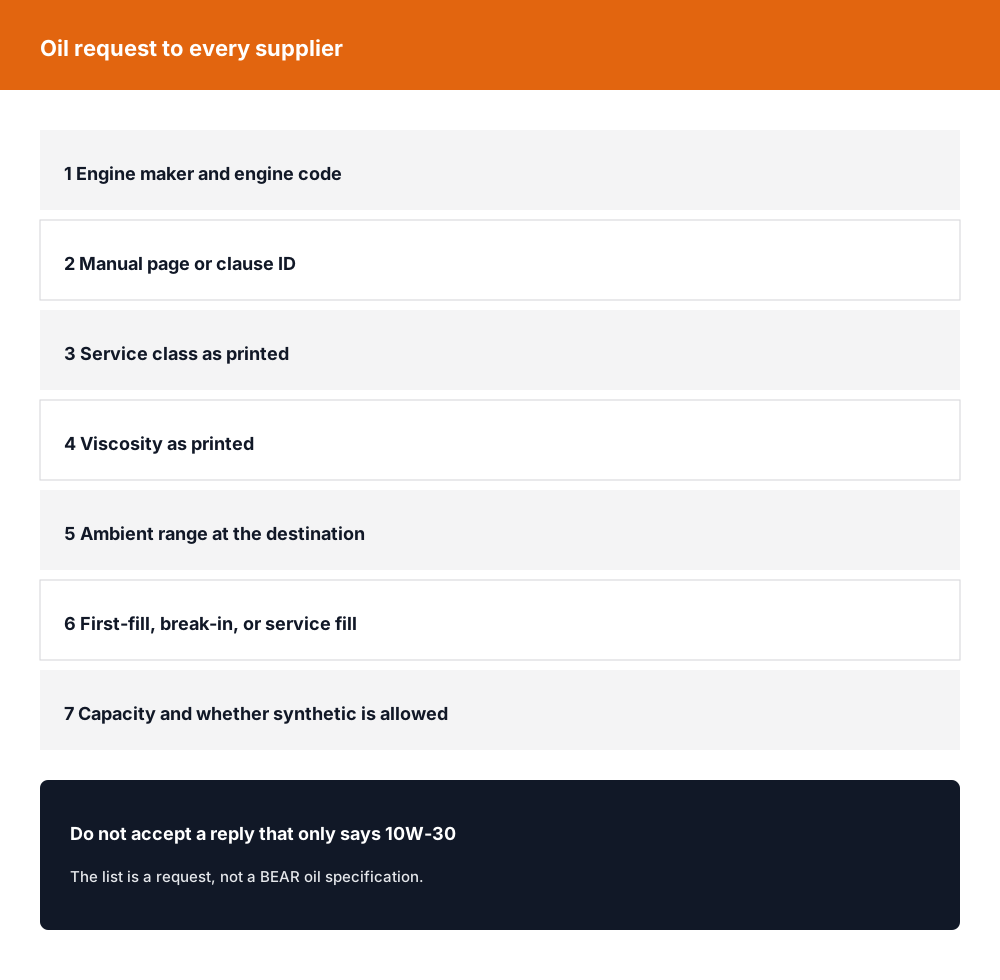
Send every supplier the same pack: destination market, climate band, engine maker and code if known, target generator family, voltage, frequency, quantity, and whether you need first-fill, break-in and service grades written separately.
Ask them to return the engine page or clause, class, viscosity, capacity, synthetic rule and what is excluded. Start from the gasoline generator category. Oil fields are confirmed only on the named configuration through the project form.