
Write fuel, oil, battery and site fields from the named model manual before idle storage. This is not industrial preservation of a container diesel plant.
In this guide5 sections
Off-season storage of a portable generator is a set of fields copied from the named model manual: fuel, oil, battery, site and the next start. A container diesel preservation programme, a warehouse “leave it full” habit or an invented 14-day fleet run cannot replace that book.
Read the storage section for that revision
Open the same manual that matches the nameplate. If the file has no storage section, write that gap and ask the supplier for the clause that belongs to this revision. Another SKU’s booklet is HOLD.
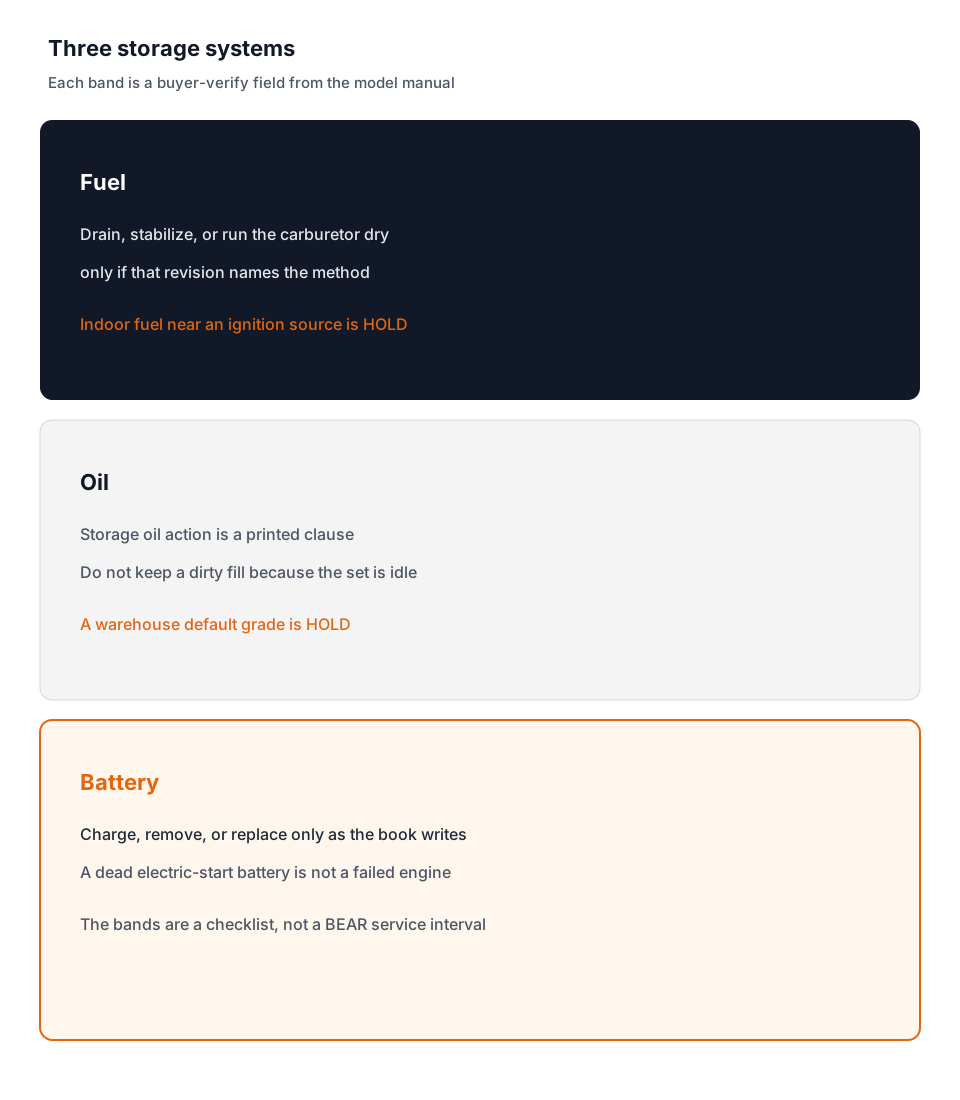
First start after a long idle still uses that book. The neighbour page is first start and break-in. Routine consumable intervals after return-to-service sit on the maintenance schedule.
Decide fuel, oil and battery as named fields
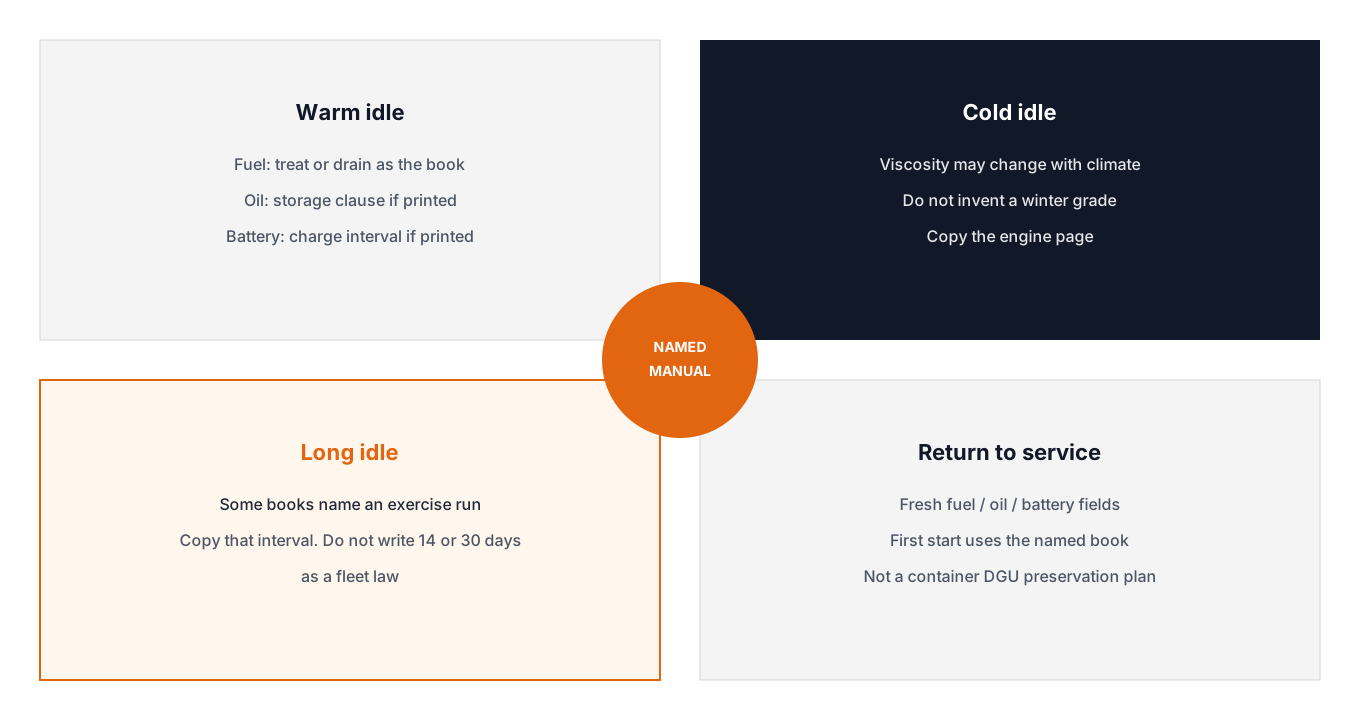
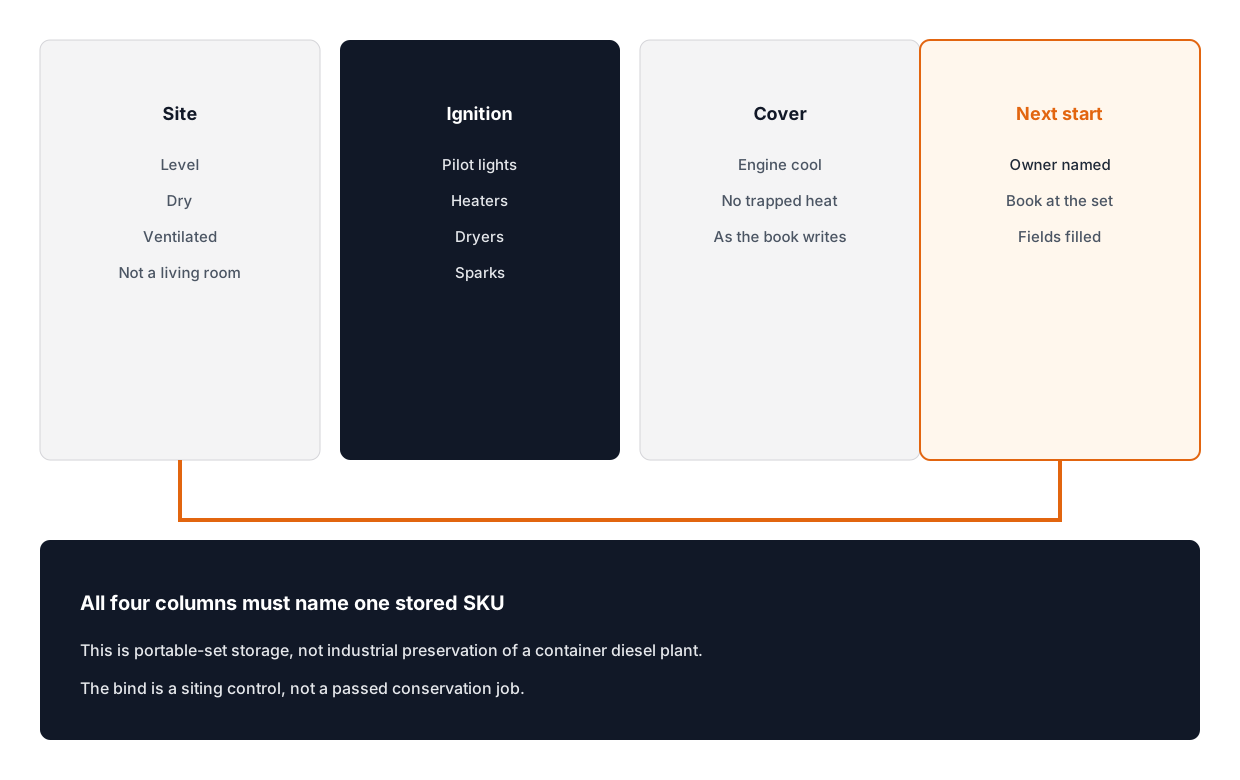
Fuel may be drained, stabilized or run through until the carburetor is dry — only if that revision names the method. Do not store gasoline in a poorly ventilated indoor space near a pilot light, heater or spark. OSHA publication 3273 is generic portable-generator practice, not a destination-market code.
Oil during storage is a printed action, not “the same fill forever.” Bind class and viscosity on oil spec request. A first-order spare kit is a neighbour task on spare parts with the first order.
Battery charge, removal or replacement follows the book for that electric-start set. A flat battery is not proof of a failed engine.
Place the set where ignition and moisture are controlled
Site fields are level, dry, ventilated and away from ignition sources. A cover goes on only after the set is cool, and only as that book allows. Direct rain or a sealed hot cover is HOLD unless the revision says otherwise.
This page does not preserve a container generating set, a fuel-farm programme or a used machine in a yard. Those are other owners and other documents.
If the book names an exercise run during long idle, copy that interval. Do not write 14 days or 30 days as a fleet law because another brand’s booklet used those numbers.
Storage HOLD table
| Field | Passes | HOLD |
|---|---|---|
| Manual clause | Storage section matches this revision | Another SKU’s booklet |
| Fuel | Drain, stabilize or run-out as printed | Indoor fuel near an ignition source |
| Oil | Storage oil action from that book | Dirty fill kept by habit |
| Battery | Charge, remove or replace as printed | Battery ignored |
| Site | Level, dry, ventilated, cover rule written | Heater room or sealed hot cover |
| Next start | Owner and book stay with the set | Invented 14- or 30-day fleet rule |
What to send with the request
Send every supplier the same pack: destination market, idle climate band, expected idle length, indoor or outdoor site, whether the set has an electric-start battery, voltage, frequency, quantity and the language of the manual you will store with the unit.
Ask them to return the storage clause for that revision, fuel and oil actions, battery care, cover rules and what is excluded. Start from the gasoline generator category. Storage fields are confirmed only on the named configuration through the project form.