
Copy first-start and break-in steps from the named model manual before the set is issued. Do not apply a fleet-wide hour rule.
In this guide5 sections
Before the first start, match the generator and engine to the correct manual revision, then record its pre-start checks and break-in instructions. Keep the set out of service while a required check or first-run instruction is unresolved; a fleet-wide hour rule cannot replace the model manual.
Open the named model manual before the first crank
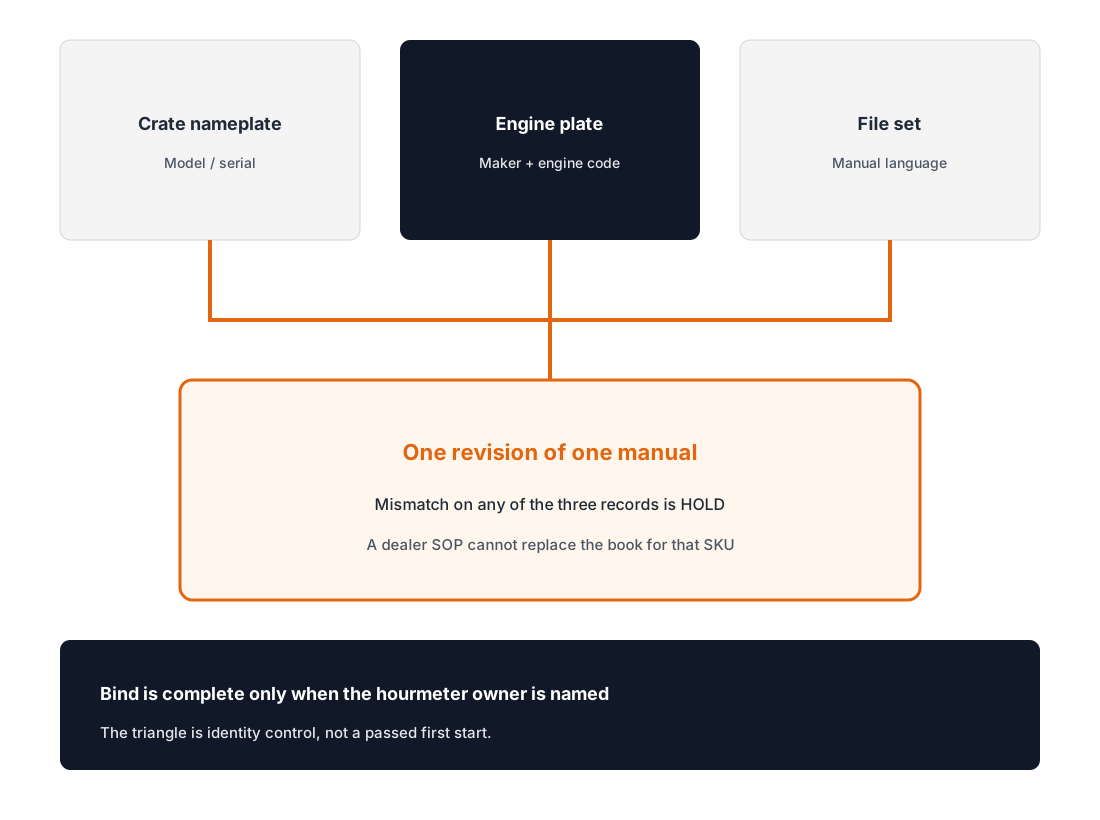
Match the crate nameplate, the engine plate and the file set. Maker, model, revision and language must be one record. A missing book, another SKU’s PDF or a photocopied page without a revision is HOLD.
How quote, nameplate and files are bound before you order is on documents before order. Destination receiving of the arriving crate is a later task on incoming inspection.
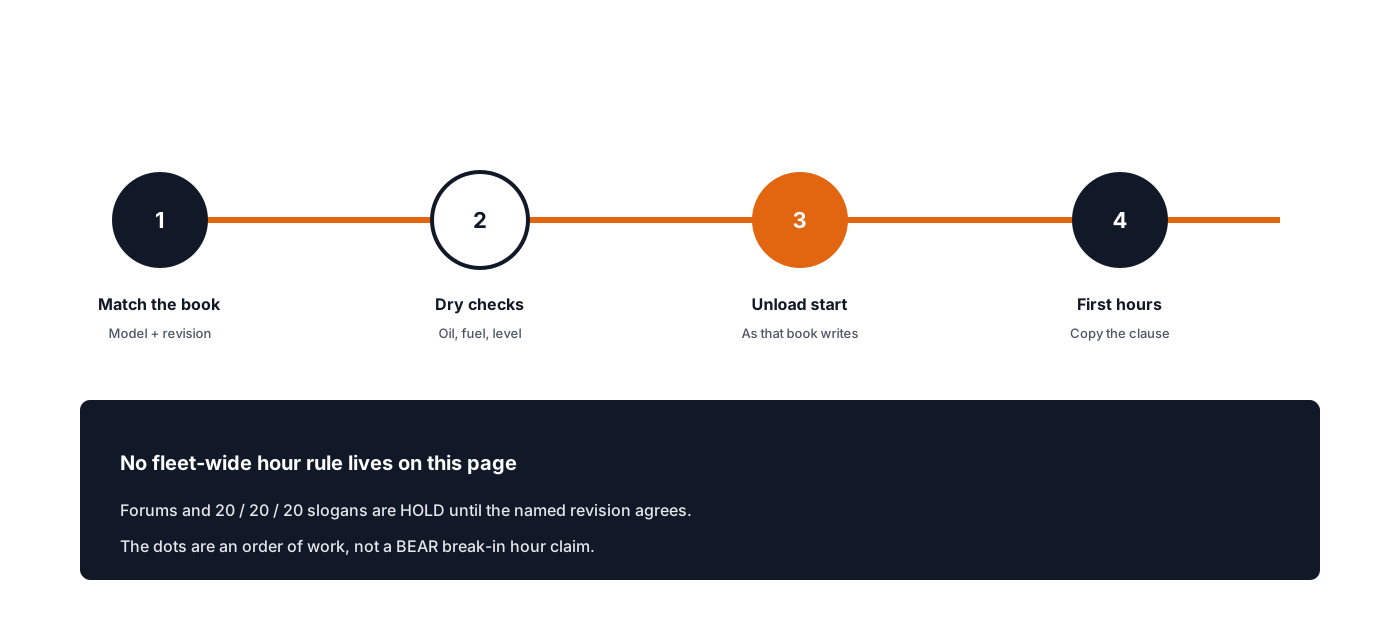
Complete the dry checks that the book names
Oil level, oil class, fuel, battery, placement and any shipping fasteners are taken from that revision. An empty crankcase, a warehouse jug with no engine page, or a first start on a slope the book forbids is HOLD.
Oil class and viscosity are a neighbour request on oil spec request. Do not invent a universal grade on this page.
Unplug loads before the first crank unless the named book says otherwise. A shop board is not a break-in load.
Run the first hours only as that revision writes
Some manuals name a no-load interval, a load band or a first oil change. Copy the printed clause, including units. Do not convert a “20 / 20 / 20” slogan, a five-hour forum rule or another brand’s booklet into a fleet law.
If the book is silent on hours, write “no printed first-hour clause” and keep the set on HOLD for a written supplier return. Silence is not permission to invent a number.
Later service intervals belong on the maintenance schedule. Off-season idle after the first start is a neighbour page on off-season storage.
First-start HOLD table
| Field | Passes | HOLD |
|---|---|---|
| Manual identity | Model, revision and language match the unit | Fleet SOP without that book |
| Dry checks | Oil, fuel and level from that revision | Empty crankcase or guessed grade |
| Unload start | Loads off until the book allows them | First crank into a full shop board |
| First-run clause | Hours or load copied from that book | Forum or 20 / 20 / 20 rule |
| First oil change | Trigger copied from that book | “Change it sometime” |
| Issue | Hourmeter owner and date recorded | Issued with no first-start record |
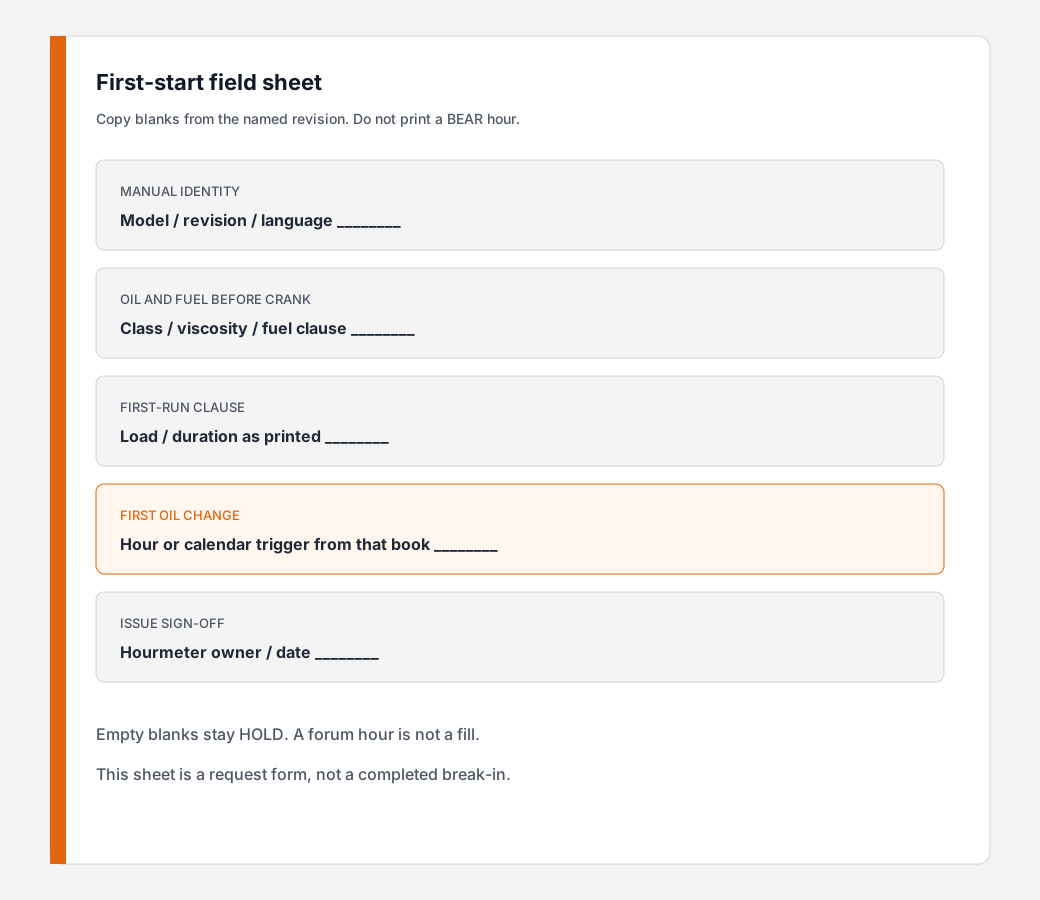
What to send with the request
Send every supplier the same pack: destination market, model or target family, voltage, frequency, quantity, the language of the manual you will keep with the set, and whether you need a written first-start and first-oil-change clause before issue.
Ask them to return the exact manual identity, the printed first-start section, the oil and fuel dry-check lines, and what is excluded. Start from the gasoline generator category. First-start fields are confirmed only on the named configuration through the project form.